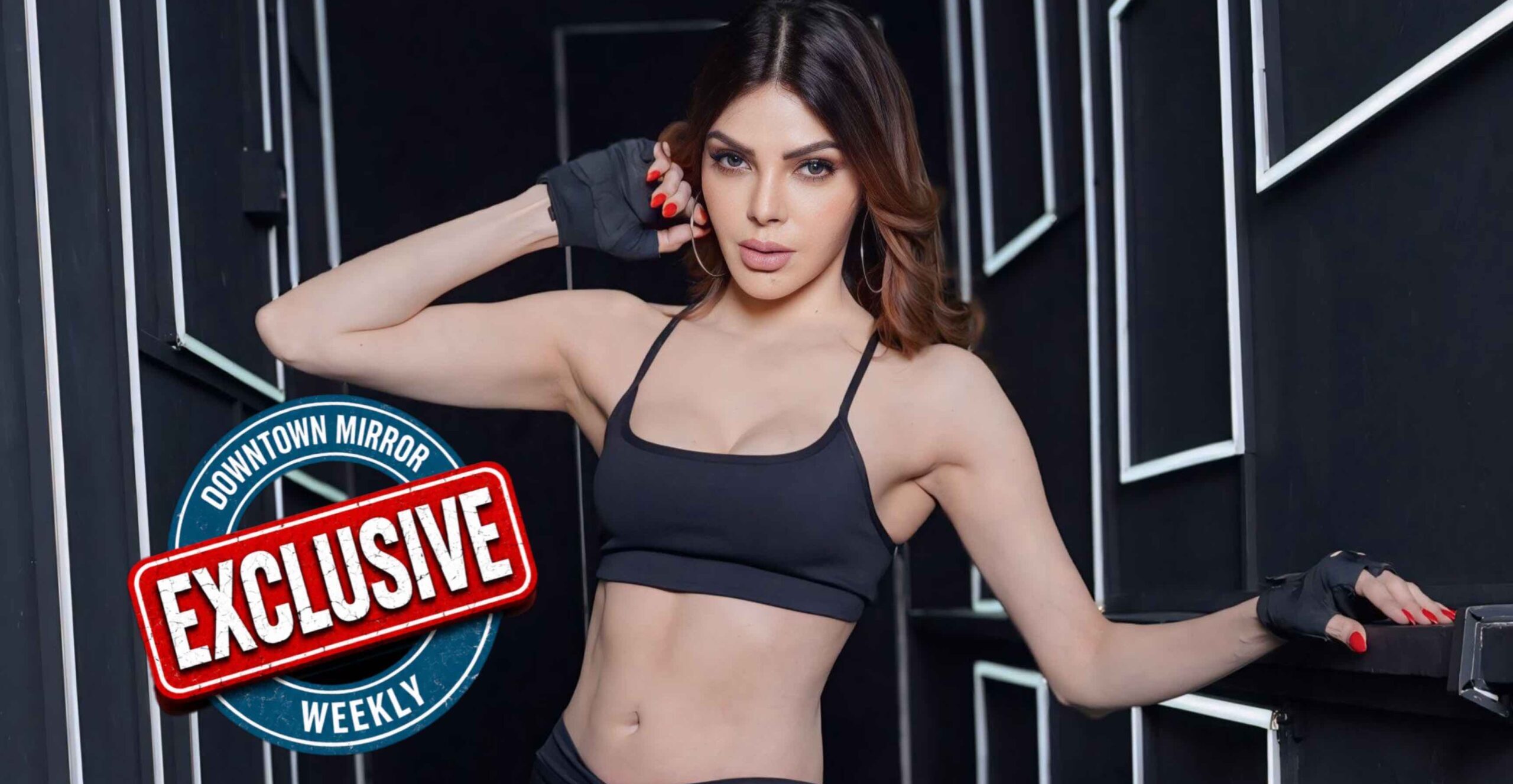
Sherlyn Chopra is a familiar name in the Indian entertainment industry, known for her bold personality, distinctive screen presence and candid views on contemporary issues.
Over the years, she has consistently remained in the public eye, navigating the worlds of cinema, glamour and popular culture while expressing her views on subjects that often generate wider conversations.

Her outspoken nature and willingness to challenge conventional perceptions have made her a recognisable and closely followed personality in the entertainment space.
Sherlyn Chopra on Why She Created Real And Unapologetic
Sherlyn Chopra is stepping into a new chapter with Real And Unapologetic, a talk show built around candid conversations and uncomfortable truths.
In an exclusive conversation, the actor and host opens up about authenticity, women’s empowerment, vulnerability and the courage to question the narratives society often takes for granted.
Excerpts:
Q1. You have always been fearless, but what specific moment or incident made you say, “Now is the exact time to launch Real And Unapologetic”?
Sherlyn Chopra. In today’s time, where there are several frivolous talk shows featuring gossip or fodder to the consumers, Real And Unapologetic presents uncomfortable truths with compassion because mental & physical health awareness isn’t optional anymore, it’s urgent. It’s a fearless, conversation-driven talk show that goes beyond headlines and social media personas to uncover the truth behind people’s lives.
The show gives experts, celebrities, change makers, and individuals with extraordinary life experiences the space to have honest, uncensored conversations about subjects that are often misunderstood, controversial, or considered taboo.
Q2. The digital space is flooded with celebrity podcasts. What is one specific taboo topic you are determined to unpack that other hosts are too afraid to touch?
Sherlyn Chopra. If there’s one subject that Real And Unapologetic is determined to explore without fear, it’s the uncomfortable truth about power, desire and double standards.
We live in a world where people celebrate authenticity but reward conformity. Public figures curate perfection, institutions protect reputations, and society often shames those who dare to speak honestly about sex, ambition, money, manipulation, mental health, beauty, betrayal, and the hidden costs of success.
Real And Unapologetic exists to challenge that silence.
This isn’t a show that sensationalises controversy for clicks. It’s a platform that asks the questions everyone is thinking about but very few are willing to ask out loud. From the politics of the entertainment industry to the psychology of relationships, from cosmetic enhancements to consent, from cancel culture to social conditioning, no subject is off-limits — as long as it’s approached with honesty, empathy, and intellectual curiosity.
The goal isn’t to provoke for the sake of provocation. The goal is to replace whispers with conversations, judgment with understanding, and carefully rehearsed narratives with unfiltered truth.
Because the greatest taboo today isn’t sex, money, or fame. It’s honesty.
Q3. You mentioned wanting raw, unfiltered truth. How do you plan to handle a situation if a guest gets highly uncomfortable or defensive on your couch?
Sherlyn Chopra. For me, Real And Unapologetic isn’t about cornering people — it’s about creating a space where honesty feels safer than performance.
If a guest becomes uncomfortable or defensive, my first instinct won’t be to push harder for a viral moment. It’ll be to understand why they’re uncomfortable. Sometimes discomfort leads to the most meaningful conversations, but only when there’s trust and mutual respect.
I’ll ask difficult questions without being disrespectful, challenge contradictions without attacking the person, and give every guest the opportunity to explain their perspective in full. They always have the freedom to say, “I’d rather not answer,” and I’ll respect that.
The show’s purpose is not to humiliate people or manufacture conflict. It’s to explore the truth behind complex issues with courage, empathy, and accountability.
The most compelling interviews don’t happen when someone is forced into a confession — they happen when they choose to open up because they know they’re being heard, not hunted.
Real And Unapologetic: A Platform for Honest Conversations
Q4. Hosting a talk show requires deep listening. How has stepping into the interviewer’s shoes changed your own perspective on vulnerability?
Sherlyn Chopra. Stepping into the interviewer’s chair has taught me that vulnerability isn’t about having all the answers — it’s about having the courage to ask the right questions and truly listen to the answers, even when they challenge my own beliefs.
I’ve realised that every person carries a story the world rarely sees. Behind confidence, fame, success, or even controversy, there’s often fear, loss, resilience, or an untold struggle. As a host, my responsibility isn’t to judge those stories — it’s to create an environment where they’re safe enough to be told.
It’s also made me more comfortable with my own vulnerability. The more honest I expect my guests to be, the more authentic I have to be myself. People can sense when a conversation is genuine and when it’s performative.
For me, vulnerability is no longer a weakness — it’s the foundation of a meaningful dialogue. When both the host and the guest are willing to lower their guard, that’s when conversations stop being interviews and become experiences that genuinely resonate with people.
Q5. Industry insiders note that your show blends high glamour with raw storytelling. Do you ever worry that your bold public image might overshadow the serious, emotional depth of the topics?
Sherlyn Chopra. I understand why people might think that. My public image has often been associated with glamour and boldness, but I’ve never believed that glamour and substance are mutually exclusive.
If anything, my own journey has taught me how easy it is for society to reduce people to labels without taking the time to understand who they really are. That’s precisely why Real And Unapologetic exists — to look beyond appearances and have conversations that reveal the human being behind the public persona.
I don’t see my image as a limitation; I see it as an opportunity to challenge preconceived notions. If viewers tune in expecting only glamour but leave with a deeper understanding of a complex issue or a renewed sense of empathy, then the show has done its job.
Also Read : Exclusive! Adrija Roy On Fame, Family, Love And Finding Inner Peace
Q6. Raksha Bandhan traditionally celebrates a brother protecting his sister. Given your strong stance on women’s empowerment, how do you define the concept of “protection” today?
Sherlyn Chopra. I believe the meaning of protection has evolved. Today, protection isn’t about controlling a woman’s choices or deciding what’s best for her — it’s about respecting her autonomy and standing beside her, not above her.
Raksha Bandhan, to me, is no longer just about a brother protecting his sister. It’s about a promise of mutual care, trust, and unwavering support. A sister can be her brother’s greatest source of strength just as much as he can be hers.
As someone who believes deeply in women’s empowerment, I don’t think women need to be “saved.” They need equal opportunities, equal respect, and the freedom to make their own decisions without fear of judgment or violence.
The greatest form of protection any society can offer isn’t surveillance or restrictions — it’s justice, education, empathy, and accountability. When women can walk freely, speak openly, dream boldly, and live safely, that’s what real protection looks like.
For me, Raksha Bandhan is ultimately a celebration of love, respect, and shared responsibility. The strongest relationships aren’t built on dependence — they’re built on equality.
Q7. If you could tie a symbolic Rakhi to a social cause, an idea, or a person who has fiercely protected your mental peace this year, who or what would it be?
Sherlyn Chopra. If I could tie a symbolic Rakhi this year, I’d tie it to self-respect and authenticity.
I’ve come to realize that nothing protects your mental peace more fiercely than the ability to set boundaries, walk away from negativity, and choose yourself without guilt. Self-respect and authenticity are the quiet strength that remind you not to compromise your values just to earn someone’s approval.
I’d also dedicate a symbolic Rakhi to everyone who protects the dignity of others — not with power or authority, but with kindness, honesty, and courage. Those are the people who make the world feel a little safer.
To me, the greatest protector isn’t always a person. Sometimes it’s a principle. And if there’s one principle that has guarded my peace this year, it’s this: not every opinion deserves a place in my mind, and not every battle deserves my energy.
That’s the kind of protection I want to celebrate — not fear, but freedom; not control, but inner strength, not external validation, but authenticity.
Q8. Modern dating and changing family dynamics can make festivals lonely for some. What is your advice to women who are navigating complex, untraditional, or strained family relationships this festive season?
Sherlyn Chopra. Festivals have a way of magnifying our emotions. For some, they’re filled with laughter and togetherness. For others, they can bring feelings of loneliness, grief, or unresolved family tensions. And that’s okay. Your experience is just as valid.
My advice to women navigating complex or unconventional family relationships is this: don’t measure the value of your life by how closely it resembles someone else’s.
Family isn’t defined only by blood. It’s defined by the people who consistently show up for you, respect you, and make you feel safe to be yourself. Sometimes, it’s your relatives. Sometimes, it’s your closest friends. And sometimes, it’s the relationship you’ve built with yourself.
Don’t feel pressured to force reconciliation, ignore your boundaries, or pretend everything is perfect just because it’s a festival. It’s possible to honor the spirit of the occasion while also protecting your peace.
Use this time to express gratitude for the love that is present in your life, however it may look. Reach out to someone who matters, create new traditions if the old ones no longer serve you, and remember that being alone for a day doesn’t mean you’re alone in life.
The most meaningful celebrations aren’t measured by the size of the gathering. They’re measured by the sincerity of the connections we nurture — with others and with ourselves.
Q9. The entertainment industry loves to market “women’s empowerment” on screen, yet behind the scenes, female artists who speak up are often labeled “difficult” or blacklisted. As someone who has faced the industry’s double standards firsthand, how will Real And Unapologetic expose or challenge this corporate hypocrisy?
Sherlyn Chopra. Women’s empowerment can’t just be a marketing slogan — it has to be reflected in the way people are treated when the cameras are off.
One of the reasons I created Real And Unapologetic is because I believe difficult conversations deserve an honest platform. The show will examine the gap between public messaging and private realities — not just in the entertainment industry, but across every field where image takes precedence over integrity.
That said, my approach isn’t to make accusations or conduct public trials. It’s to ask thoughtful, well-researched questions, invite diverse perspectives, and encourage open dialogue. If there are systemic issues — whether they’re related to workplace culture, gender bias, unequal opportunities, or retaliation against those who speak up — they deserve to be discussed responsibly and backed by facts, not speculation.
I also want to create space for stories of progress. There are people and organisations working to build healthier, more equitable workplaces, and those voices deserve to be heard alongside those highlighting the challenges.
My hope is that Real And Unapologetic becomes known not for fuelling outrage, but for encouraging accountability. When conversations are honest, respectful, and evidence-based, they have the power to inspire change. That’s the kind of impact I want the show to have.
Q10. Speaking up and being “unapologetic” often comes with heavy professional and personal costs. Looking back, is there any moment where you felt the price of being fiercely honest was almost too high to pay?
Sherlyn Chopra. Absolutely. There have been moments when speaking my truth came with consequences — professionally, personally, and emotionally. There were times when it would have been easier to stay silent, avoid difficult conversations, or simply go along with what was expected.
But I’ve learned that silence has a cost too. Every time you suppress your voice to make others comfortable, you lose a small part of yourself. And over time, that price can be even greater than the consequences of speaking honestly.
That doesn’t mean I’ve never questioned myself. I’m human. There have been moments of doubt, disappointment, and introspection. But those experiences also taught me resilience. They taught me to distinguish between criticism that helps me grow and noise that’s meant only to discourage me.
Being unapologetic doesn’t mean being inflexible or believing you’re always right. It means having the courage to live in alignment with your values, while remaining open to learning, evolving, and admitting when you’ve made a mistake.
If my journey has taught me anything, it’s that authenticity rarely comes without a price. But I’d rather pay the price for being true to myself than spend my life trying to become someone else’s idea of who I should be.
That’s the spirit I hope Real And Unapologetic brings to every conversation — the spirit of courage to go on despite feeling the fear.
Q11. If you could invite one major political or industry figure who desperately needs a reality check on your show, who would it be and why?
Sherlyn Chopra. I don’t think the purpose of Real And Unapologetic is to put one individual on trial or create a spectacle around a person. The real value of a conversation lies in questioning ideas, systems, and decisions — not just personalities.
If I could invite someone with immense influence, it would be a person who represents power — whether from politics, business, entertainment, or society — and who is willing to have an honest conversation about accountability, responsibility, and the impact their choices have on ordinary people’s lives.
A “reality check” is not about attacking someone. It’s about creating a space where difficult questions can be asked, different perspectives can be heard, and leaders can reflect on the consequences of their actions.
The most powerful conversations happen when people who hold influence are willing to step away from carefully crafted narratives and engage with genuine curiosity and humility.
That is the kind of dialogue I want to create — one where nobody is above questions, and everyone is open to learning.
Q12. Traditionally, Raksha Bandhan focuses on the male sibling. How can we encourage modern men to move past traditional gatekeeping and become actual, effective allies to women in daily life?
Sherlyn Chopra. I believe the true spirit of Raksha Bandhan should evolve from the idea of simply protecting women to truly respecting and empowering them.
Modern men can become genuine allies by understanding that women don’t need someone to make decisions for them — they need people who stand with them, support their choices, and respect their independence.
Being an ally isn’t just about grand gestures on special occasions. It’s in everyday actions: listening without dismissing, challenging sexist attitudes when they appear, creating safe spaces, respecting boundaries, sharing responsibilities at home, and celebrating a woman’s ambitions without feeling threatened by her success.
The strongest form of protection is not control; it is trust. A man who believes in a woman’s ability to choose, lead, succeed, and speak her truth is offering a far greater gift than protection alone.
Raksha Bandhan can become a celebration of mutual respect — where siblings don’t see each other through the lens of who protects whom, but as equals who uplift, encourage, and stand by one another.
Real strength is not in limiting someone’s freedom. Real strength is in helping someone feel free.

Rapid-Fire Round
Q1. Complete the sentence: “The biggest misconception people have about Sherlyn Chopra is…”
Sherlyn Chopra. The biggest misconception people have about Sherlyn Chopra is that she is outrageous! As a matter of fact, I’m a very simple girl with big dreams.
Q2. One trait that will instantly get a guest banned from your talk show couch?
Sherlyn Chopra. If someone comes with the intention to demean, intimidate, spread deliberate falsehoods, or disrespect the dignity of another person, then that’s where I draw the line. Respect is non-negotiable.
Q3. What is the best Raksha Bandhan gift a woman can gift to herself?
Sherlyn Chopra. The best Raksha Bandhan gift a woman can give herself is the promise to never abandon herself.
We often celebrate the people who protect, support, and love us — but sometimes the most important relationship we have is the one we build with ourselves.
To choose your peace, honour your dreams, trust your instincts, and stop seeking validation for simply being who you are—that is a powerful gift.
Self-love is not selfish. It is the foundation from which we create healthier relationships, stronger boundaries, and a more authentic life.
This Raksha Bandhan, I would encourage every woman to gift herself something priceless: the freedom to take up space, the courage to say no when needed, and the confidence to embrace every part of who she is.
Because the strongest protection a woman can have is knowing her own worth.
Q4. What is your ultimate defence mechanism when social media trolls get too loud?
Sherlyn Chopra. My ultimate defence mechanism when social media trolls get too loud is disengagement with negativity and knowing who I am beyond the opinions of strangers.
Social media gives everyone a voice, but not every voice deserves access to your peace. Over the years, I’ve learned that reacting to every comment gives power to people who may not even understand your journey.
Of course, I’m human. Words can hurt, especially when they are personal or deliberately cruel. But I’ve learned to separate constructive criticism from negativity. If there’s something valuable to learn, I listen. If it’s simply meant to tear me down, I let it pass.
My focus has always been on my work, my growth, and the people who genuinely connect with what I stand for. The loudest voices online are not always the most meaningful ones.
The best response to hate is not always a comeback — it is continuing to build, create, and live authentically. When you are secure in your own truth, external noise loses its power.
At the end of the day, my peace is more valuable than winning an argument with someone who doesn’t know my story.
Q5. If Real And Unapologetic could achieve just one major shift in your audience’s mindset this year, what would you want it to be?
Sherlyn Chopra. If Real And Unapologetic could create just one major shift in my audience’s mindset, I would want people to start embracing authenticity and stop living their lives through the lens of other people’s approval.
So many people suppress their opinions, hide their struggles, compromise their dreams, or change who they are because they fear judgment. I want the show to remind people that authenticity is not something to apologize for.
But being unapologetic doesn’t mean being insensitive or unwilling to grow. It means having the courage to embrace your truth while still showing empathy, kindness, and accountability.
My hope is that viewers walk away feeling brave enough to ask difficult questions, have honest conversations, challenge outdated beliefs, and accept themselves more deeply.
If someone watches Real And Unapologetic and feels, “I don’t have to shrink myself to make others comfortable,” then the show has achieved its purpose.
Because the biggest transformation begins when a person stops seeking permission to be themselves.
Q6. What is more common in Bollywood — real support or transactional relationships?
Sherlyn Chopra. I think, like any industry, Bollywood has both. There are relationships built on genuine affection, loyalty, mentorship, and mutual respect, but there are also relationships that are influenced by opportunity, visibility, and professional gain.
The entertainment industry is highly competitive, and when fame, money, and careers are involved, it can sometimes blur the lines between personal connection and professional networking. Some people may come into your life because of what you represent at a particular moment, while others stay because they genuinely value you as a person.
Over time, you learn to recognise the difference. Real support is consistent — it exists even when there is nothing to gain. It shows up during difficult phases, not just during moments of success.
I don’t think it’s fair to paint an entire industry with one brush. There are incredibly generous, grounded, and supportive people in Bollywood. But it is also important to acknowledge that, like everywhere else, authenticity can sometimes be tested when ambition and self-interest enter the equation.
Ultimately, the biggest lesson is to build relationships with awareness. Celebrate genuine connections, but never lose sight of your own self-worth by depending entirely on external validation.
Q7. If you could permanently delete one toxic trend from the Indian entertainment industry, what would it be?
Sherlyn Chopra. If I could permanently delete one toxic trend from the Indian entertainment industry, it would be Sexism, Stereotypes and Job Bias. The culture of reducing people to their image rather than valuing their talent, character and individuality is highly prejudicial.
The entertainment industry is built on creativity, but sometimes people — especially women — are judged more by perceptions, appearances, or public narratives than by their actual work and contribution. A person can be celebrated one day and unfairly dismissed the next because of a label created around them.
I would love to see an industry where talent is given more importance than gossip, where individuality is respected, and where people are not punished for having a voice or evolving beyond the image others have created for them.
Constructive criticism is important. Accountability is important. But personal attacks, unnecessary comparisons, and the pressure to fit into a certain mould only limit creativity.
The industry becomes stronger when it allows people to be multidimensional — when artists are encouraged to experiment, speak honestly, make mistakes, learn, and grow.
Because behind every public image is a real person, and that person deserves to be seen beyond the spotlight.
Q8. In the world of modern dating, is chivalry dead or just hiding?
Sherlyn Chopra. I don’t think chivalry is dead — it has simply evolved.
The old idea of chivalry was often associated with traditional gestures, but true chivalry was never just about opening doors or grand romantic displays. At its core, it was about respect, thoughtfulness, and making another person feel valued.
In modern dating, I think people are looking for a more balanced form of chivalry. It’s not about one person having power over another or following outdated roles. It’s about showing up, communicating honestly, respecting boundaries, being considerate, and making an effort.
A person who listens, keeps their word, supports your ambitions, and treats you with kindness is displaying a form of chivalry that is far more meaningful than a rehearsed gesture.
So no, I don’t think chivalry has disappeared. I think it has moved beyond performance and become about emotional maturity.
The most attractive quality today isn’t someone who tries to impress you — it’s someone who makes you feel respected, seen, and safe to be yourself.
Q9. Bold fashion choices or bold statements — which one defines you better?
Sherlyn Chopra. I would say bold statements define me more than bold fashion choices!
Fashion has always been a form of self-expression for me, and I enjoy using it to celebrate confidence, creativity, and individuality. But clothes are only one part of the story. What truly defines a person is the courage to express their thoughts, stand by their values, and remain authentic even when it isn’t the easiest path.
A bold outfit can make a statement for a moment, but a bold belief can create a conversation.
For me, being unapologetic has never been about seeking attention — t has been about refusing to dilute myself to fit into someone else’s expectations. Whether it’s through my work, my conversations, or my choices, I want to represent the freedom to be comfortable in your own skin.
Ultimately, the strongest statement a person can make is not what they wear; it’s who they are when nobody is watching.
Q10. What is the best comeback to someone who tells you to “tone it down”?
My best comeback would be: “I will never shrink myself to make someone else comfortable.”
When someone says “tone it down,” sometimes it’s genuine feedback, and it’s worth considering. But sometimes it comes from discomfort with seeing someone be confident, outspoken, or different.
The goal isn’t to be loud for the sake of being loud. The goal is to be authentic, thoughtful, and true to yourself.
So I would say: “You better get used to my evolution as I’ll keep evolving until I die!”
Downtown Mirror Whatsapp Channel
Tags : Sherlyn Chopra, Sherlyn Chopra interview, Sherlyn Chopra latest interview, Sherlyn Chopra Real And Unapologetic, Sherlyn Chopra Talk Show Real And Unapologetic, Sherlyn Chopra talk show, Sherlyn Chopra podcast,
Sherlyn Chopra women empowerment, Sherlyn Chopra latest news, Sherlyn Chopra on women empowerment, Sherlyn Chopra on mental health, Sherlyn Chopra on authenticity, Sherlyn Chopra on vulnerability,
Who Sherlyn Chopra, Sherlyn Chopra biography, Sherlyn Chopra career, Sherlyn Chopra latest news, Sherlyn Chopra interview 2026, Sherlyn Chopra new show, Sherlyn Chopra host, Sherlyn Chopra talk show, Sherlyn Chopra Real and Unapologetic, Sherlyn Chopra social media, Sherlyn Chopra women empowerment, Sherlyn Chopra bold statements,
Sherlyn Chopra fearless, Sherlyn Chopra controversial topics, Sherlyn Chopra entertainment industry,
Exclusive Sherlyn Chopra, Sherlyn Chopra Bollywood, Sherlyn Chopra actress, Sherlyn Chopra celebrity interview, Sherlyn Chopra mental health, Sherlyn Chopra self respect, Sherlyn Chopra authenticity, Sherlyn Chopra interview on women empowerment, Sherlyn Chopra on mental health awareness, Sherlyn Chopra on authenticity and self respect, Sherlyn Chopra on breaking societal double standards, Sherlyn Chopra Exclusive