
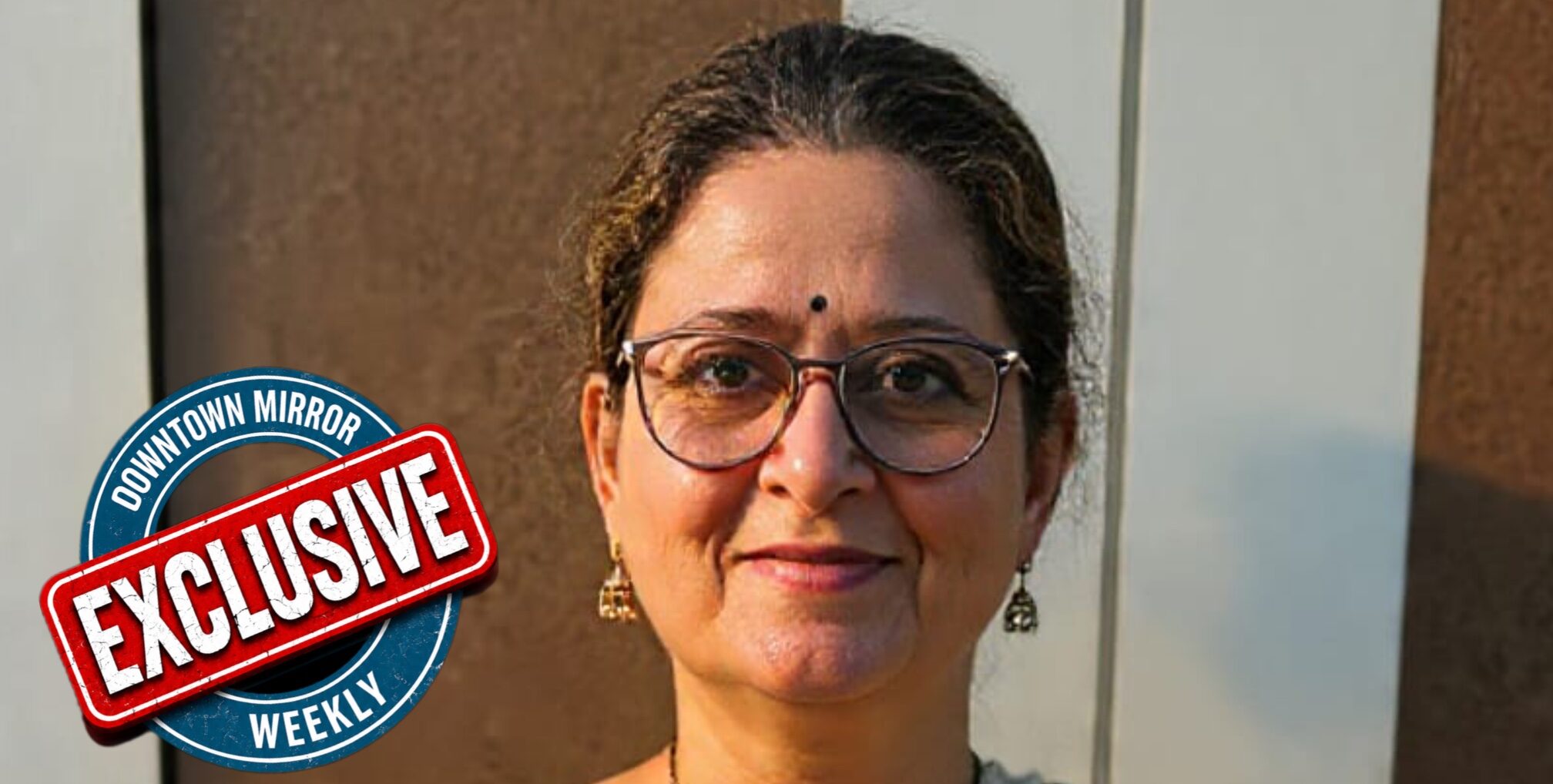
Arachana Joshi: “Great Television Begins With Real People, Not Perfect Characters”
Highlights
- Veteran television writer Arachana Joshi reflects on her journey from theatre and All India Radio to becoming one of India’s most respected TV writers.
- Shares behind-the-scenes insights into writing iconic shows like Kahiin To Hoga, Kaisa Ye Pyar Hai, Mrs. Kaushik Ki Paanch Bahuein, and Kahe Diya Pardes.
- Explains the storytelling differences between Hindi and Marathi television.
- Reveals how she creates relatable female protagonists and emotionally engaging family dramas.
- Opens up about balancing multiple daily shows while meeting demanding television deadlines.
- Offers valuable advice for aspiring television writers looking to enter the entertainment industry.
Arachana Joshi on Writing Iconic Hindi and Marathi TV Characters
Veteran television writer Arachana Joshi has spent over two decades shaping some of Indian television’s most memorable family dramas across Hindi and Marathi entertainment. From her early days in theatre and All India Radio to scripting iconic shows like Kahiin To Hoga, Mrs. Kaushik Ki Paanch Bahuein, Kahe Diya Pardes, and her current projects Mi Jinkun Ghein Saare and Paathrakhin, she has consistently crafted emotionally rich, relatable stories.
In this exclusive interview, Arachana Joshi discusses the evolution of television writing, creating powerful female protagonists, balancing multiple daily shows, adapting to changing audience preferences, and shares invaluable advice for aspiring writers hoping to make their mark in the industry.
Excerpts…
Also Read : Exclusive – Gulki Joshi On Hui Gumm Yaadein, Ek Radha and Yoga: “Strength Doesn’t Always Have To Be Loud
From Theatre and All India Radio to Television Writing
Q1). You started as a theatre artist and casual announcer for All India Radio in Indore. How did those early days performing live shape your understanding of dialogue and character?
Arachana Joshi. Theatre teaches you that dialogue isn’t just words on a page; it’s breath, rhythm, and reaction. When you are on stage, you instantly know if a line fails because you can feel the audience’s energy shift. Radio, on the other hand, stripped away visuals and forced me to rely entirely on tone, pause, and inflection to convey emotion. Together, they taught me that character is built in the spaces between lines—how a person speaks when they are hiding something, or how their rhythm changes when they are angry. And this foundational understanding of performance helped me writing characters too..
Q2). Your transition into writing began with translation work for National Geographic. What did that experience teach you about precision in language?
Arachana Joshi. It was a masterclass in economy and accuracy. When you translate documentary content, you are bound by time-codes and factual truth. You cannot use ten flowery words where three precise ones will do, because the visual on screen moves fast. It taught me to respect the weight of every single word. That discipline is incredibly useful in daily soaps, where scene lengths are strictly timed and you need to hit an emotional high point before the commercial break.
Q3). You write fluently in both Hindi and Marathi. How does your creative process change when switching between the cultural nuances of these two languages?
Arachana Joshi. The emotional core of human relationships remains the same, but the vocabulary of expression changes completely. Hindi television often paints with a broader, more dramatic brush, drawing from a vast, pan-Indian tapestry. Marathi, however, thrives on earthy, rooted realism and subtle domesticity. When I switch to Marathi, my thinking aligns with the quiet dignity, wit, and specific social structures of Maharashtrian households.
Writing Iconic Hindi TV Shows Like Kahiin To Hoga and Kaisa Ye Pyar Hai
Q4). Early in your career, you wrote for iconic, high-drama Hindi shows like Kahiin To Hoga, Kaisa Ye Pyar Hai, and Kya Hadsaa Kya Haqeeqat. What was the secret to keeping audiences hooked week after week during that golden era of television?
Arachana Joshi. That was a magical era! The secret was simple: unrelenting pace and high emotional stakes. We weren’t just writing plots; we were writing cliffhangers. Every episode had to end on a question mark that made the viewer anxious for 24 hours until the next episode aired. The characters—whether it was Kashish or Angad—were larger than life, yet their core motivations (love, betrayal, revenge) were deeply primal. We gave the audience intense conflicts and didn’t let the momentum drop for a single second.
Q5). Shows like Kittu Sab Janti Hai and Mrs. Kaushik Ki Paanch Bahuein feature very distinct, strong female protagonists. How do you approach writing women who balance traditional family values with modern independence?
Arachana Joshi. The key is to avoid making independence look like rebellion against the family. A truly strong woman doesn’t need to break her home to prove her strength; she holds it together on her own terms. Kittu was relatable because she was ambitious but deeply rooted. Mrs. Kaushik’s daughters-in-law each had a distinct personality type, but their strength lay in unity. I approach these characters by asking: “What is her compromise, and what is her non-negotiable?” When a woman fights for her values within her family ecosystem, the audience respects her journey much more.
Also Read : EXCLUSIVE- Gulki Joshi, Mahesh Thakur and Kshitee Jog Likely To Join Zee TV New Show
Hindi vs Marathi Storytelling: Understanding Cultural Nuances
Q6). Reflecting on your work for Kajal, K Street Pali Hill, and Ram Milaayi Jodi, how do you manage to keep the storytelling fresh when writing for multi-generational family dramas?
Arachana Joshi. You have to shift the perspective. A conflict between a mother-in-law and daughter-in-law is old news, but how a grandmother views her modern granddaughter’s choices brings a fresh generational dynamic. In multi-generational dramas, I try to ensure that every age group has a valid point of view. No generation should be entirely “wrong” or entirely “right.” It is the clash of differing, well-intentioned mindsets that keeps the drama fresh and stops it from becoming a caricature.
Q7). You have a massive track record with Zee Marathi, including mega-hits like Kahe Diya Pardes and Yeu Tashi Kashi Mi Nandayla. What do you think defines the core sensibilities of the Marathi television audience compared to Hindi?
Arachana Joshi. The Marathi audience values relatability and literature-backed storytelling above all else. They want to see characters who look, talk, and live like their neighbours or relatives. While Hindi TV can sometimes lean into fantasy, opulence, and aspirational luxury and yes melodrama..
Q8). Kahe Diya Pardes beautifully tackled a cross-cultural romance (North Indian and Maharashtrian). How much of your own journey moving between Hindi and Marathi entertainment did you channel into that show?
Arachana Joshi. A tremendous amount! Having lived and worked in both spheres, I understood the subtle anxieties, the linguistic comedy, and the genuine warmth that emerges when a North Indian family and a Maharashtrian family come together. I channelled my own observations of how small cultural misunderstandings can be solved with a little love and humour. Shiv and Gauri’s story worked because it wasn’t a forced dramatic conflict; it was born out of genuine, lived-in cultural observations.
Q9). Shows like Aga Bai Sun Bai and Nanda Saukhya Bhare explore complex saas-bahu dynamics. How do you avoid clichés and find new, relatable angles in these relationships?
Arachana Joshi. By treating them as two complex individuals rather than a dynamic archetype. The moment you stop writing the saas as a “vamp” and the bahu as a “victim,” the cliché breaks down. In Aga Bai Sun Bai, we looked at power dynamics, mentorship, and how women can uplift each other despite being on opposite sides of a traditional hierarchy. When you give both women vulnerabilities, secrets, and logical reasons for their behaviour, the relationship becomes human rather than stereotypical.
Q10). Jago Mohan Pyare brought a delightful touch of fantasy and comedy. How refreshing was it to pivot to comedy and magical realism after writing intense dramas?
Arachana Joshi. It was an absolute breath of fresh air! Writing intense drama can be emotionally draining because you are constantly swimming in conflict, tears, and betrayal. Switching to magical realism and comedy allows you to play like a child again.
How Daily Soap Writing Has Changed Over Two Decades
Q11). Your current shows, Mi Jinkun Ghein Saare on Colors Marathi and Paathrakhin on Star Pravah, are actively on air. How do you balance the intense daily grind of writing multiple ongoing shows simultaneously?
Arachana Joshi. It requires immense mental discipline and a very clear compartmentalisation of mind spaces. When I sit down for Mi Jinkun Ghein Saare, I am entirely in that world, feeling those specific characters’ struggles. When I switch to Paathrakhin, I have to completely reset my emotional palette. It’s a relentless, high-pressure environment with daily telecast deadlines. You have to love the chaos to survive it!
Q12). Television has changed drastically from the days of Tumhari Disha and Mamta to the current era. How has your writing style evolved to satisfy the shorter attention spans of today’s viewers?
Arachana Joshi. The luxury of slow character builds and long, atmospheric setups is gone. Today, you have to grab the viewer within the first three minutes of the episode. Scenes are shorter, dialogue is punchier, and the plot progression has to be much faster. We used to stretch a single misunderstanding for weeks; now, the secret gets revealed in three days, and we move to the next fallout. My writing has become far more visual and direct, ensuring that every scene serves a dual purpose: moving the plot forward and delivering an emotional hook.
Advice for Young Writers Entering the Indian Television Industry
Q13). What is the biggest piece of advice you would give to young, aspiring writers who want to break into the Indian television industry today?
Arachana Joshi. Observe real life, not just other television shows. If you only watch TV to learn how to write TV, your writing will be a copy of a copy. Go out, talk to people, listen to how people fight, how they apologize, and how they express love in real life. Secondly, develop thick skin and stamina. Television is a marathon, not a sprint. Your best scripts might get rejected or altered due to channel feedback or production constraints. You have to learn to detach from your ego and keep writing anyway.
Rapid-Fire Round
Q1. A Hindi show of yours you’d love to reboot today?
AJ. Kittu Sab Janti Hai. Kittu’s spirit as a young female journalist navigating a changing world would resonate beautifully with today’s Gen-Z and millennial audience.
Q2. Your favorite character that you’ve ever written?
AJ. Gauri from Kahe Diya Pardes—she holds a very special, permanent place in my heart.
Q3. Late-night writing with coffee, or early-morning writing with tea?
AJ. Early morning writing with a cozy lemon water follows with fresh coconut water, then green tea then kadak chay ki plyali.
Q4. The hardest part of writing a daily soap opera?
AJ. The endless hunger of the medium. The fact that no matter how brilliant today’s episode is, there is an empty 22-minute slot waiting to be filled tomorrow.
Q5. One word of advice for an aspiring TV writer?
AJ. Resilience.
For latest news and updates from the world of television, music, OTT, astrology, fashion, style, hollywood, bollywood and bhojpuri cinema. Do follow our Whatsapp Channel below for more:
Downtown Mirror Whatsapp Channel
FOLLOW DOWNTOWN MIRROR TELLY YOUTUBE CHANNEL

